In recent years, cloud technology has revolutionized the world of web hosting and a concept called Cloud Virtual Server or Cloud VPS has become one of the most popular options for online businesses. A cloud virtual server is a new generation of virtual servers that run on a cluster of several interconnected servers instead of running on a specific physical server, and this feature gives it unparalleled stability, scalability, and flexibility. But what exactly is a cloud virtual server, how is it different from a traditional virtual server, and why has it become so popular? In this comprehensive article, we answer all these questions and explore the benefits, uses and important points of choosing Cloud VPS.
What is a virtual cloud server?
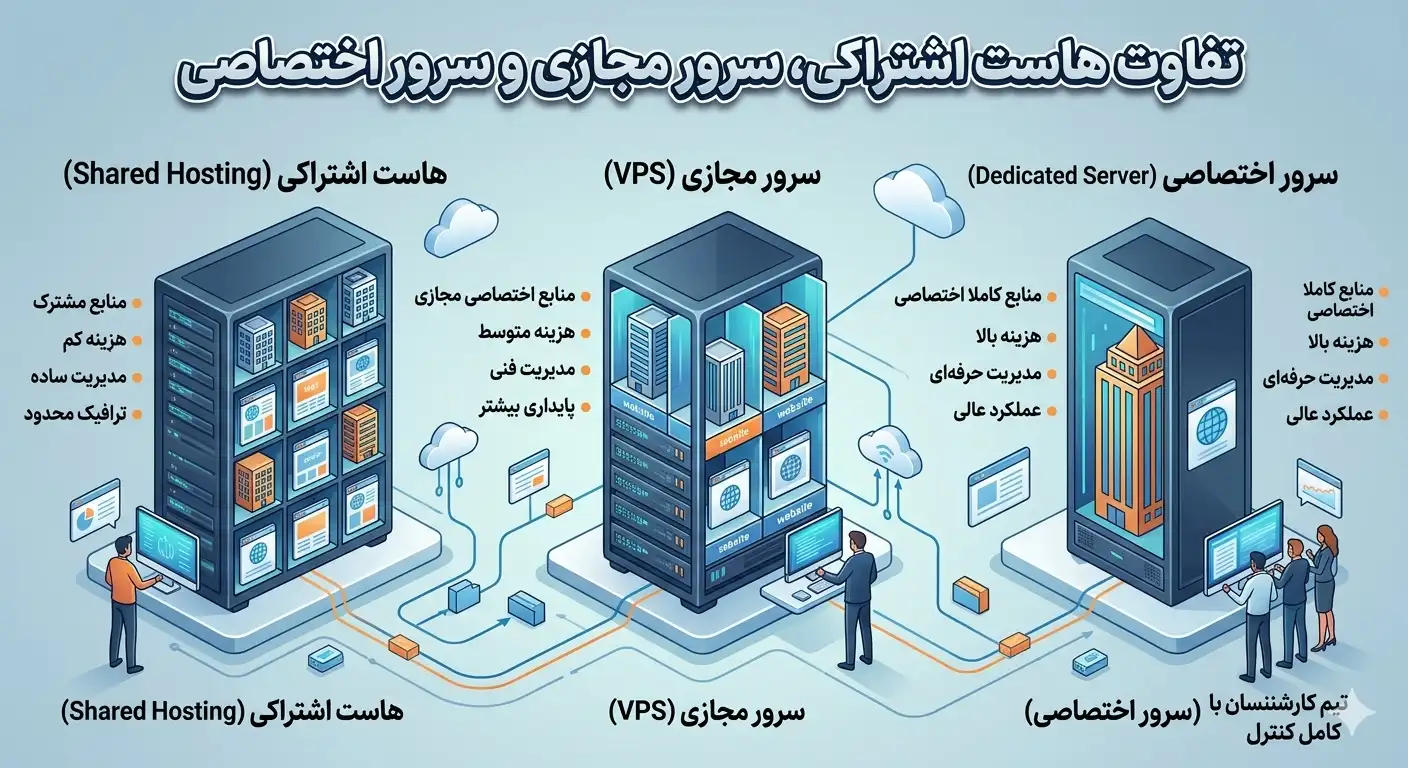
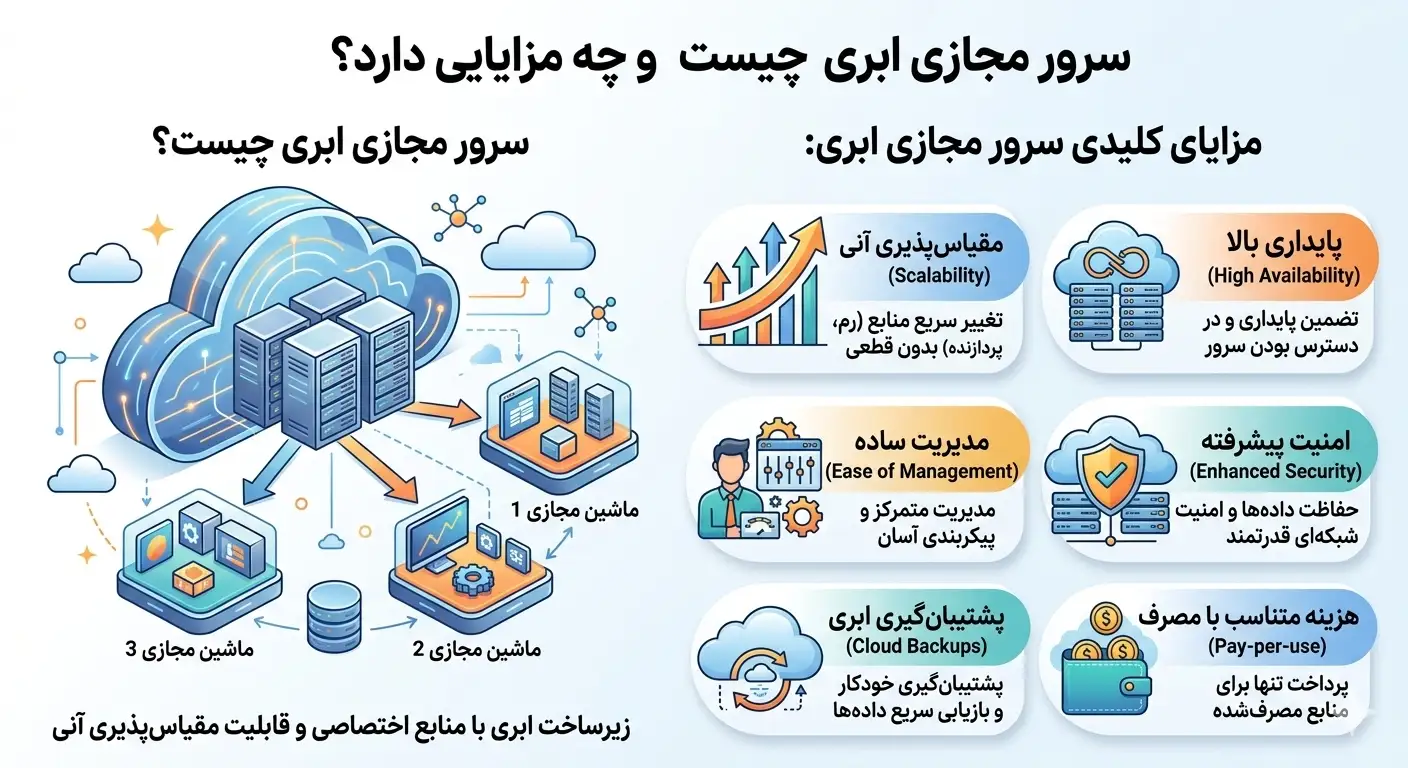
To understand what a cloud virtual server is, we must first understand its difference from a traditional virtual server. In a traditional virtual server, your resources are provided from a specific physical server. If that physical server has a hardware problem, your service will also be unavailable. But in a cloud virtual server, resources are provided from an extensive and distributed infrastructure including dozens or hundreds of physical servers that are connected to each other and act as a single pool of resources.
This distributed architecture means that if one of the physical servers in the cluster fails, your workload is automatically transferred to the other servers and your service continues without interruption. For this reason, cloud virtual server offers much higher stability and availability than traditional servers. In addition, cloud technology provides the ability to increase or decrease resources at a moment's notice.
Summary: A cloud virtual server means the power and control of a VPS, but with the stability and scalability of a distributed cloud infrastructure.
How does cloud virtual server work?
Cloud virtual server functionality is based on three key concepts: virtualization, clustering, and distributed storage. We will explain each one below.
Virtualization and shared resources
Like the traditional virtual server, here also virtualization technology is used to divide the resources. But the difference is that these resources come from a large, distributed pool, not from a single machine.
Clustering of servers
Several physical servers are connected to each other in the form of a cluster and work in harmony. This clustering provides the possibility of load distribution and automatic service relocation in case of failure.
Distributed storage
Instead of being stored on a single disk, your data is distributed across multiple storage devices and usually has multiple copies. This feature minimizes the possibility of data loss and increases information security.
Advantages of cloud virtual server
Now that we understand what a cloud virtual server is and how it works, let's examine its most important advantages. These advantages are the main reasons for the growing popularity of Cloud VPS:
- High stability and uptime: Due to its distributed architecture and automatic migration, cloud virtual server offers very high uptime (often 99.99 percent).
- Instant Scalability: You can increase or decrease resources within minutes without service interruption; A feature that is critical for handling sudden traffic.
- Pay-as-you-go: In many cloud models, you only pay for the resources you actually use, which optimizes cost management.
- Data redundancy and security: Keeping multiple copies of data on a distributed infrastructure reduces the possibility of data loss.
- High performance: The use of modern hardware and high-speed NVMe disks ensure fast performance.
- Flexibility: Ability to choose operating system, configure and install any software with full root access.
Comparison of cloud virtual server with traditional virtual server
To help you make a better decision, the table below shows the key differences between a cloud virtual server and a traditional virtual server:
| Criterion | Cloud virtual server | Traditional virtual server |
|---|---|---|
| Infrastructure | A cluster of multiple servers | A physical server |
| Stability against failure | Very high (auto shift) | dependent on a server |
| Scalability | Instant and without interruption | more limited |
| uptime | Usually 99.99% | Usually 99.9 percent |
| Payment model | Often based on consumption | Usually fixed |
| Data redundancy | top (multiple copies) | limited |
| Initial cost | flexible | Usually lower |
Applications of cloud virtual server
Due to its unique features, cloud virtual server is suitable for a wide range of applications. The most important applications of Cloud VPS are:
- High-Traffic Online Stores: Sites that experience sudden spikes in traffic during sales seasons or campaigns and need instant scalability.
- SaaS applications: Web-based software services that must be always available and stable.
- Startups: New businesses that are growing rapidly and need to be able to expand their infrastructure quickly.
- Content and media platforms: News and media sites with high bandwidth and stability requirements.
- Development and Test Environments: Development teams that need to quickly create and remove environments.
- Availability-sensitive applications: Any project where even a few minutes of downtime is costly.
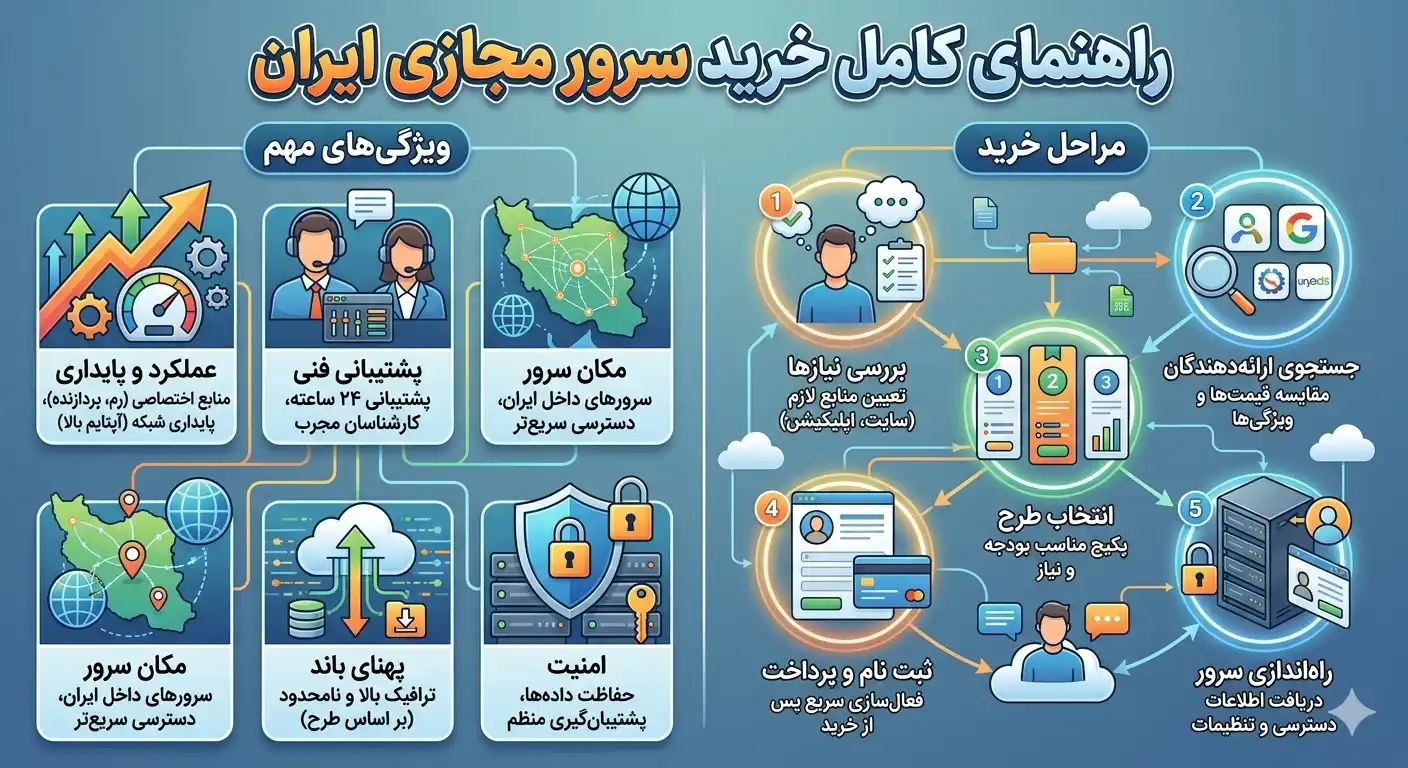
If your business is growing and you need a stable and flexible infrastructure, you can check the available options on the page Buy a virtual server and choose the plan that suits your needs.
When to choose a virtual cloud server?
Despite the many benefits, a cloud virtual server is not necessary for all projects. Pay attention to these points when making a decision:
A cloud virtual server is suitable if:
- Stability and high uptime are critical to your business.
- Your site traffic fluctuates a lot and you need fast scaling.
- You want to protect against hardware failure.
- Your project is growing and you may need more resources quickly.
A traditional virtual server is sufficient if:
- Your project has steady and predictable traffic.
- You're looking for the lowest possible cost and extreme stability isn't your top priority.
- You have a small site or personal project.
Recommendation: If service outages are costly to your business or you anticipate rapid growth, investing in a cloud server is a smart decision.
Important points when choosing a virtual cloud server
To choose a suitable virtual cloud server, pay attention to these factors:
- Quality of cloud infrastructure: Make sure the provider uses modern hardware and a stable network.
- Uptime Guarantee: Look for providers that guarantee high uptime in their Service Level Agreement (SLA).
- Backup Policy: Check if automatic backups and data redundancy are provided.
- Pricing model: Transparency in how costs and resources are calculated is important.
- Datacenter location: For Iranian users, the internal datacenter provides lower ping.
- Quality of support: 24/7 support and quick response are critical in times of crisis.
To read more about the types of servers and the selection guide, we suggest you refer to Rapido Server Articles.
Key concepts in the world of virtual cloud servers
To have a deeper understanding of what a virtual cloud server is, it is necessary to familiarize yourself with some common terms in this field. These concepts will help you make a more informed decision when comparing different services.
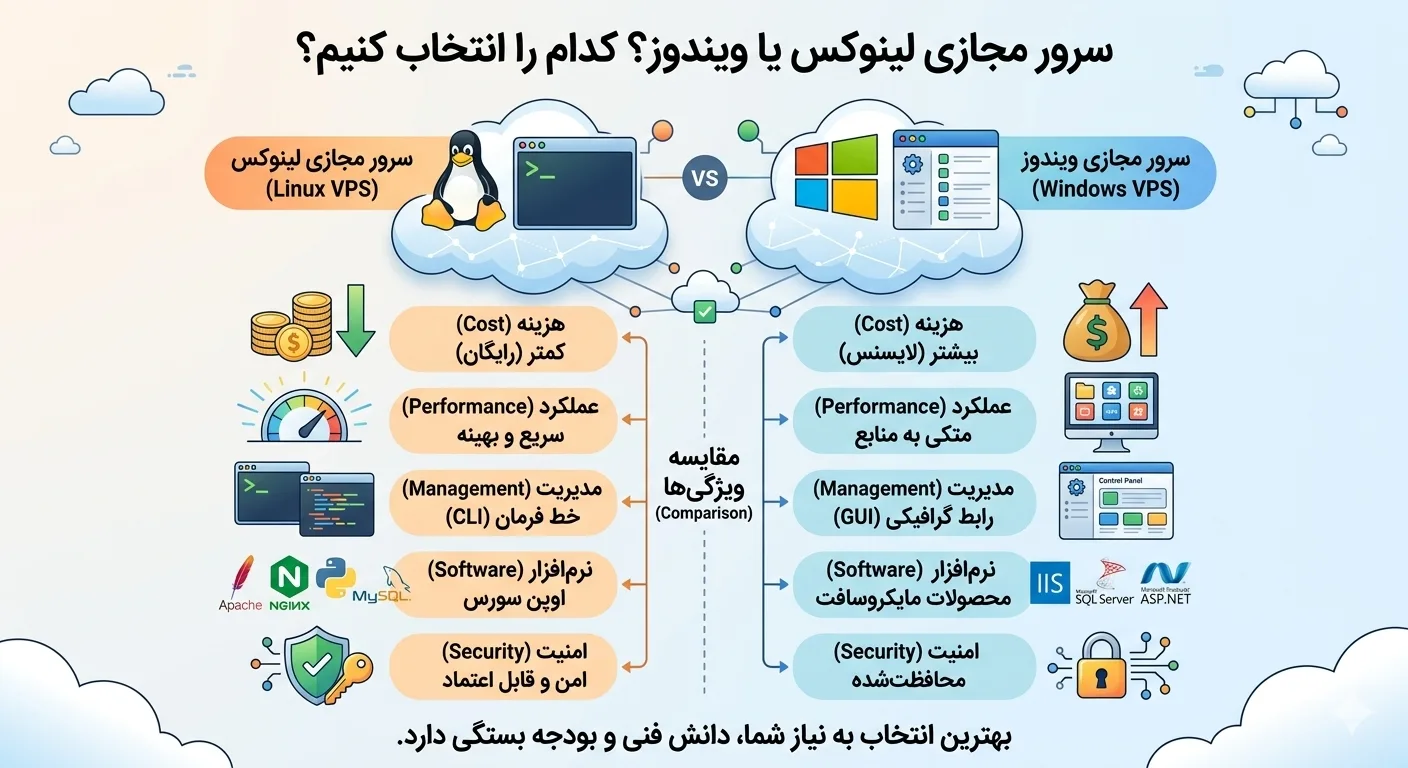
- Vertical Scaling: Increasing the resources of a server such as RAM and CPU. In the cloud server, this is often done without interrupting the service.
- Horizontal Scaling: Add more servers to distribute the workload, which is suitable for very large projects.
- Load Balancing: Intelligent distribution of traffic between multiple servers to avoid overloading a specific server.
- Redundancy: Keeping backup copies of data and resources so that in case of failure, the service can continue without interruption.
- Service Level Agreement (SLA): A provider's formal commitment about uptime and quality of service.
Tip: When choosing a cloud virtual server, pay attention to the provider's SLA; This document guarantees what compensation you will receive in the event of an excessive outage.
False beliefs about cloud virtual server
There are several misconceptions surrounding the concept of a virtual cloud server, which it is better to put aside before making a decision in order to make a realistic choice.
- “Cloud server is always more expensive”: With a pay-as-you-go model, cloud server can be cost-effective for many projects, especially if you have fluctuating traffic.
- "The cloud server never goes down": Although its stability is very high, no system is 100% outage-free; But the probability of failure is much lower than the traditional server.
- “Managing a cloud server is complicated”: In fact, a cloud virtual server usually has the same control and interface as a traditional virtual server, and it is not more difficult to manage.
- “Only suitable for large enterprises”: Startups and even small businesses can benefit from the flexibility and stability of a cloud server.
By discarding these misconceptions, you can evaluate the cloud virtual server based on the realities and real needs of your project and make a better decision.
Security and backup in the virtual cloud server
Security is one of the most important concerns when choosing any type of hosting, and a cloud virtual server offers significant benefits in this regard. Because of the distributed architecture, your data is typically held on multiple storage devices and has multiple copies, so the chance of data loss due to hardware failure is greatly reduced.
However, the real security of a virtual cloud server does not depend only on the infrastructure; But correct configuration by the user also plays a key role. It is still necessary to follow principles such as using strong passwords, activating firewalls, regularly updating software and restricting access. Many cloud server providers provide features such as snapshots and automatic backups that allow you to quickly restore the server to a previous state in the event of a problem.
When choosing a cloud server, be sure to ask the provider about their backup policies, snapshot capabilities, and data redundancy. These features can be the difference between a brief outage and a data loss disaster in times of crisis. Even with the high redundancy of cloud infrastructure, making independent backups of critical data is always a smart move and provides an extra layer of security for your business.
summary
In this article, we thoroughly examined what a virtual cloud server is and what are its advantages. Combining the power and control of a traditional virtual server with the stability and scalability of a distributed cloud infrastructure, Cloud VPS is an ideal option for growing businesses and projects that require high uptime and flexibility. Distributed architecture, automatic migration in case of failure, instant scalability and data redundancy are some of the most important features that distinguish cloud virtual servers from traditional examples. Of course, the final choice depends on the specific needs of your project; If stability and rapid growth are your priority, cloud virtual server will be the best investment. By knowing your needs and choosing a reliable provider, you can enjoy all the benefits of this advanced technology.
Frequently asked questions
What is the main difference between a cloud virtual server and a normal virtual server?
The main difference is in the infrastructure. A regular virtual server runs on a single physical server, but a cloud virtual server runs on a cluster of multiple interconnected servers. This distributed architecture enables higher stability, instant scalability and data redundancy in the cloud server.
Is a cloud virtual server more expensive than a regular virtual server?
It depends on the pricing model and consumption. In many cases, a cloud server with a pay-as-you-go model can be economical, but because of the more advanced features, the base cost is usually slightly higher than a traditional virtual server. In contrast, it offers higher stability and scalability.
Is a cloud virtual server suitable for a WordPress site?
Yes, cloud hosting is very suitable for WordPress sites, especially high-traffic online stores and sites with fluctuating traffic. High stability and the ability to increase resources at the moment guarantee a smooth and uninterrupted user experience.
What happens if one of the physical servers goes down?
One of the biggest advantages of cloud virtual server is right here. If one of the physical servers in the cluster fails, your workload is automatically transferred to the other servers and your service continues without noticeable interruption.